The question “should artists be involved in politics” is not an interesting question, mostly because it’s irrelevant. Artists can be involved in politics if they want to be, and not if they don’t. Fans can like an artist’s politics or not. Audiences can give an artist their attention or not. There is no gatekeeper, so who would enforce whether an artist “should” or “should not” do anything?
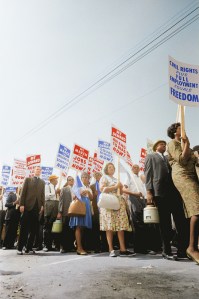
A more interesting question is what impact the arts or artists have or don’t have on any political movement. The most common reference to the impact of the arts in the U.S. that we discuss now is to the Civil Rights Era and anti-Vietnam War protests. But if we look back even further, the arts have always been an important part of social and political movements throughout human history. Music, verse, and theater have probably been a part of political movements since the dawn of time, and have never stopped being important. Political cartoons came on the scene with the printing press. In the 20th century through today, film (Apocalypse Now and its impact on ending the Vietnam War, as the first example that popped into my head), television (Will & Grace and its impact on the gay rights movement, to pick another well known example), and social media (“We’re in the middle of a hostile government takeover” song by @agiftfromtodd, as a contemporary example).
Using satire and humor has always been a part of political action through the arts – and if you read my last two posts this week (No Gatekeepers Part 1: National Parks Guerrilla Action or No Gatekeepers Part 2: Yarnbombers), you’ll know I’m partial to those tactics.
But I do think it’s important for people to temper their expectations of the impact of the arts or any particular artist. The job of an artist is distinctly different from being an activist. And any song, poem, play or movie can’t replace actual political organizing and political power. They’re not mutually exclusive, of course (see the commitment that Jane Fonda has to real activism), but they don’t necessarily go together.
I heard a fascinating interview with historian Dorian Lynskey, author of the book 33 Revolutions Per Minute: A History of Protest Songs from Billie Holiday to Green Day on the Rest is History podcast last year. Lynskey was discussing the impact of artists and music in the social movements of the 1960s, when he said this:
“what disappointed a lot of people on the real left in 1968, and I think continues now, is the fact that a lot of the time musicians, they don’t want to really become committed activists. There’s a limit to how far they’re going to go. Sometimes it has to be said, they haven’t really thought through a lot of these issues and are prone to being rather sort of naïve or gauche.”
Artists get bored or out of their depth, is what he’s saying. Their skills lie in making art, not public policy or the grind and long work of organizing.
A line I’ve heard arts advocates use is “the arts aren’t the solution to everything, but they can be PART of the solution to anything.” That’s a useful way to think about the arts and political action: it’s part of what makes a movement effective.
The arts can humanize the impact of bad policies, simplify messages (which you know I’m a fan of doing), make messages memorable, deliver political messages indirectly for a different persuasive effect than facts and raw political power can. Save yourself heartache and disappointment and don’t put all your hopes on an artist to get actual political change over the finish line.
Discover more from Hannah Grannemann
Subscribe to get the latest posts sent to your email.
 Hannah Grannemann
[…] Part 1: Make your own guerrilla National Parks Guides, “No Gatekeepers” Part 2: Yarnbombers, How much can we expect from artists that get involved in politics?). That experience of the puppet show about the Balkan Wars was a seminal moment in my aesthetic […]
LikeLike
[…] Part 1: Make your own guerrilla National Parks Guides, “No Gatekeepers” Part 2: Yarnbombers, How much can we expect from artists that get involved in politics?, Paperhand Puppet […]
LikeLike
[…] How much can we expect from artists that get involved in politics? […]
LikeLike